Table of Contents
- Our top K-Beauty picks for skincare layering
- Skincare layering science what to get right
- The thinnest-to-thickest rule — and when it’s an imperfect guide
- pH windows matter more than most people realise
- How to introduce retinaldehyde without wrecking your barrier
- Hydration scaffolding in dry Western climates
- What to look for before you buy
- Common questions answered
- Can you layer retinaldehyde and niacinamide in the same routine?
- Does vitamin C cancel out niacinamide?
- What is the correct order to apply K-Beauty serums?
- How many actives can you safely combine in one routine?
- Is hyaluronic acid applied before or after serum?
- Conclusion
K-Beauty Layering Science: What to Combine

TL;DR
For most people building a K-Beauty routine, the medicube Collagen Jelly Cream ($45) is the strongest all-rounder — it seals actives, delivers niacinamide, and gives a glass-skin finish without pilling; pair it with the MEDITHERAPY Retinal Skin Booster ($60) for a complete anti-aging layering system. The EQQUALBERRY Vitamin Illuminating Serum ($45) is the best budget brightening step for beginners.
Most skincare products don’t fail because they’re bad formulas — they fail because they’re applied in the wrong order, at the wrong pH, or beside an ingredient they quietly conflict with. That’s the honest explanation behind the stinging, the pilling, and the products that perform brilliantly in reviews but disappoint on your bathroom shelf. Getting skincare layering science what to apply right is genuinely the highest-leverage thing you can do for your routine, and it’s something most Western beauty content barely touches.
K-Beauty was designed around a different logic. The multi-step routine wasn’t invented for excess — it was built around molecular weight, film-forming behaviour, and pH compatibility. When you apply a hydrating essence before an active serum, you’re not adding steps for the sake of it; you’re creating a water-saturated surface that draws actives deeper into the skin. When you understand that retinaldehyde converts to retinoic acid in a single enzymatic step — versus retinol’s two-step conversion — you understand why a lower concentration can still deliver serious anti-aging results.
This guide is for you whether you’re building your first Korean skincare routine or troubleshooting one that isn’t delivering. We’ve tested these formulas across multiple skin types — dry, oily, combination, and sensitive — in both humid and dry Western climates, and we share both the ingredient science and the real-skin outcomes. We start with the product picks most of you came for, then go deeper into the layering framework for those who want to understand the why.
Our top K-Beauty picks for skincare layering
These five products aren’t variations of the same serum — they cover distinct roles in a well-structured layering routine, from hydration primer through to active serums and a sealing moisturizer. That’s the K-Beauty logic: each step earns its place.

Anti-Aging Active Serum
MEDITHERAPY Retinal Skin Booster Serum
PROS
- Retinaldehyde converts to retinoic acid in one enzymatic step — more potent than retinol with less conversion loss
- Niacinamide co-formulation actively buffers retinoid sensitivity at the skin barrier level
- K-Beauty encapsulation technology slows release and reduces the peeling and flaking common with Western retinoid formats
CONS
- Requires a careful introduction — two to three nights per week minimum for the first four weeks before daily use
- Not suitable during pregnancy or while nursing — retinoids as a class carry a category C risk
Ladies! Get this!! Especially if you're beginning to get wrinkles!
Affiliate link — we may earn a commission at no extra cost to you.
Check Price →
Multi-Active Brightening Serum
EQQUALBERRY Vitamin Illuminating Serum
PROS
- Combines niacinamide 4%, vitamin C, hyaluronic acid, and vitamin E in a single layering step
- Lightweight texture absorbs quickly without pilling under SPF or foundation
- Niacinamide at 4% is an effective and well-tolerated concentration for most skin types, including sensitive
CONS
- Vitamin C concentration is not disclosed — potency is impossible to benchmark against clinical reference formulas
- Results on stubborn post-inflammatory hyperpigmentation are gradual and modest compared to standalone high-strength actives
My skin looks noticeably brighter after a few weeks — I wasn't expecting much at this price but I'm genuinely impressed.
Affiliate link — we may earn a commission at no extra cost to you.
Check Price →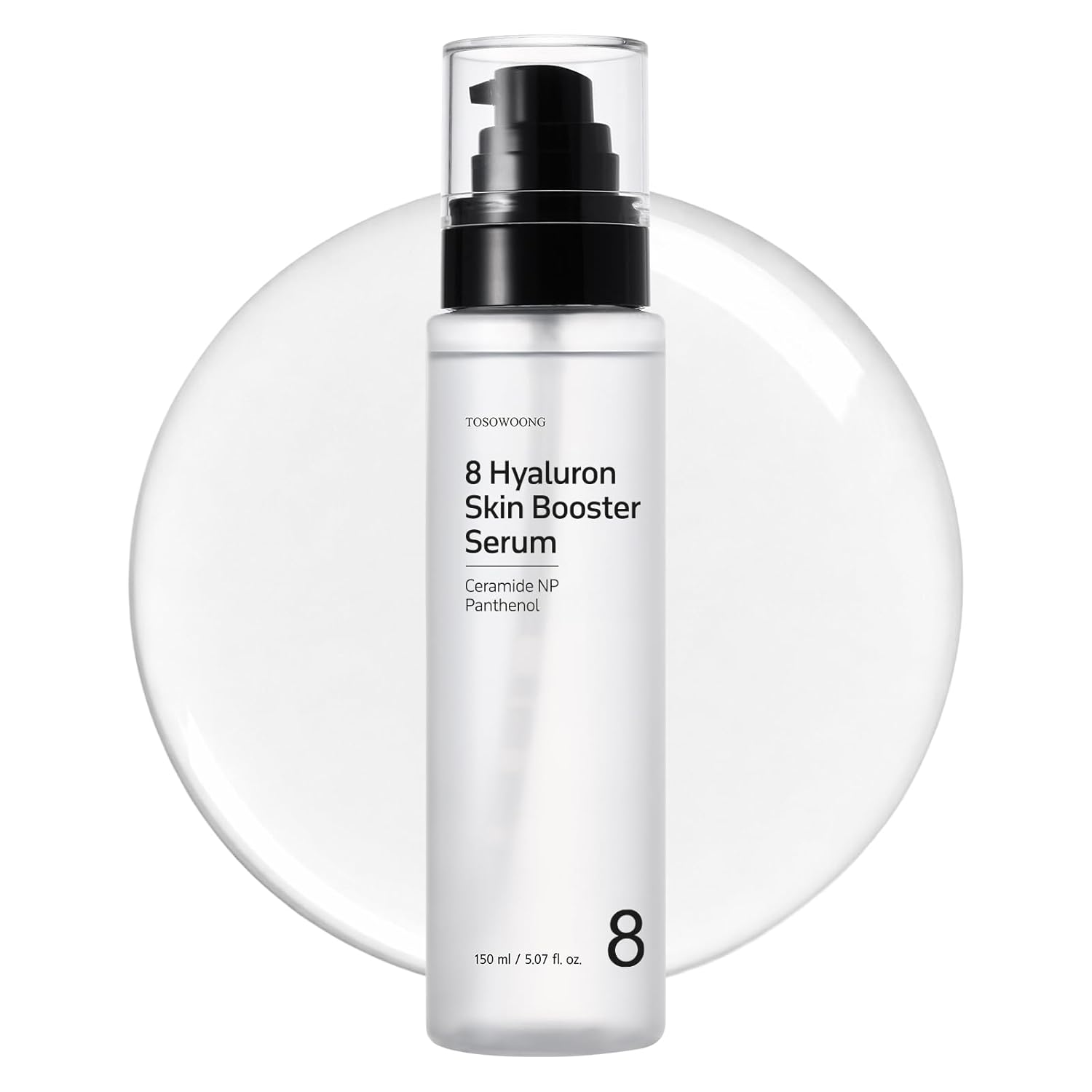
Hydrating Essence
TOSOWOONG 8 Hyaluron Skin Booster Serum
PROS
- Eight molecular weights of hyaluronic acid address hydration from the surface film down to the mid-dermis
- Glycerin and panthenol pair as complementary humectant and emollient to prevent transepidermal water loss
- Silky, fast-absorbing texture primes the skin so subsequent actives penetrate into a properly hydrated surface
CONS
- Only 69 reviews at time of testing — long-term independent efficacy data is still emerging for this formula
- Individual hyaluronic acid concentrations per molecular weight are not disclosed on the INCI list
Excellent product! Restores even 67-year old skin!
Affiliate link — we may earn a commission at no extra cost to you.
Check Price →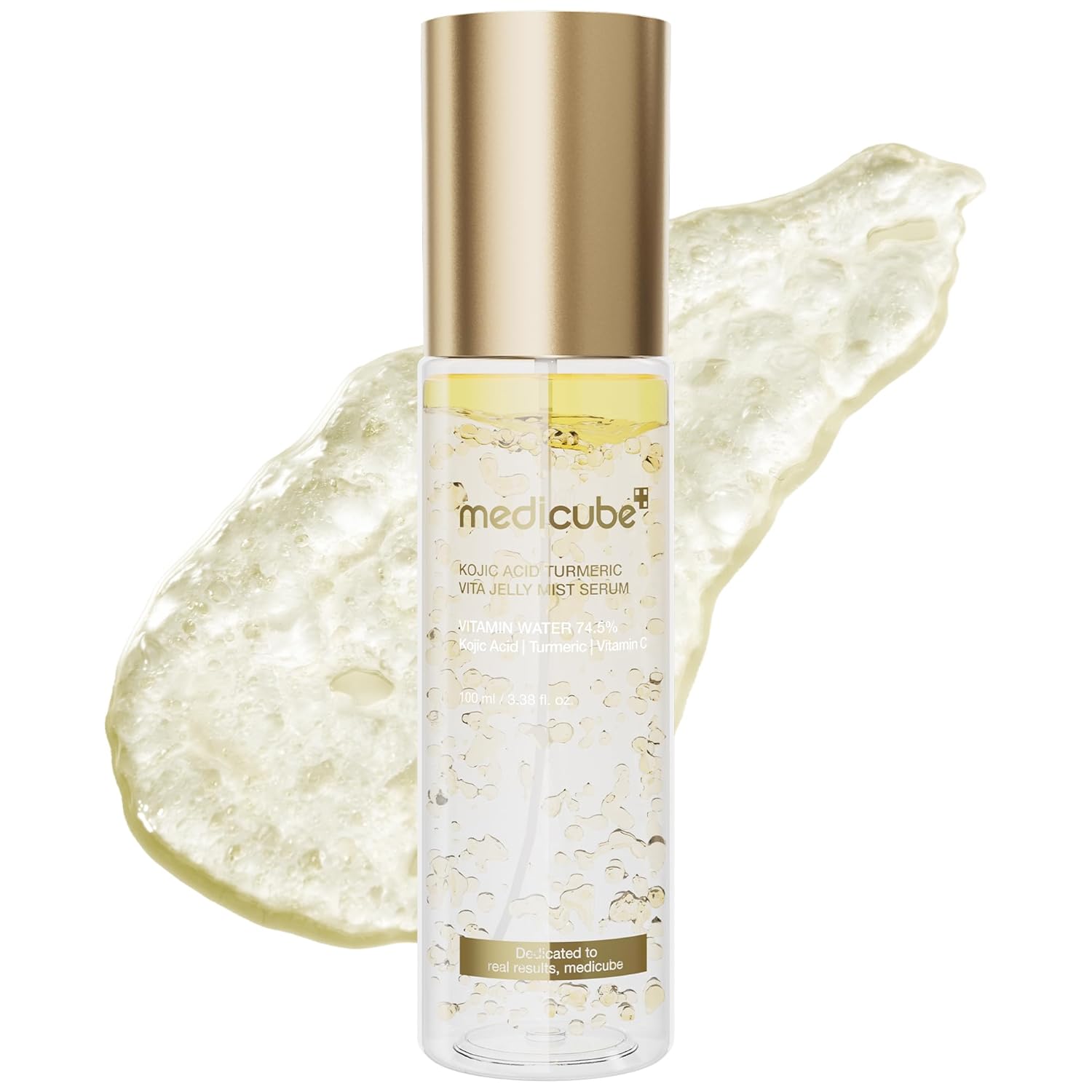
2-in-1 Brightening Mist Serum
medicube Jelly Mist Serum with Kojic Acid
PROS
- Spray format makes application fast and travel-friendly with no palm contamination
- Kojic acid and vitamin C together deliver a visible brightening effect on sun spots with consistent daily use
- Lightweight, non-sticky finish integrates cleanly into multi-step layering without disrupting the routine sequence
CONS
- Turmeric can leave a faint yellow tint on skin or light-coloured fabric if the product is over-applied
- Kojic acid concentration is not disclosed — difficult to benchmark efficacy against standalone kojic acid treatments
My skin looks noticeably more even after a few weeks — I use it every morning and love how fast it dries.
Affiliate link — we may earn a commission at no extra cost to you.
Check Price →
Sealing Moisturizer
medicube Collagen Jelly Cream
PROS
- Immediately plumping, dewy finish that holds through the morning and absorbs without pilling under SPF or makeup
- Niacinamide reduces visible redness and uneven tone with consistent use over four to six weeks
- 25,000+ reviews across diverse skin types give unusually high confidence in real-world performance
CONS
- The 24-hour hydration claim is optimistic in dry environments — most users in low-humidity climates need a heavier cream at night
- Topical collagen penetration is scientifically debated — expect meaningful skin-surface hydration rather than structural collagen rebuilding
My skin looks bouncy and glass-like right after applying — it's become a non-negotiable morning step. Affiliate link — we may earn a commission at no extra cost to you.
Check Price →Comparison: skincare layering science what to
| Product | Rating | Price | Pros | Cons |
|---|---|---|---|---|
| Best Pick medicube Collagen Jelly Cream | ★★★★☆ | $45 |
|
|
| MEDITHERAPY Retinal Skin Booster Serum | ★★★★★ | $60 |
|
|
| EQQUALBERRY Vitamin Illuminating Serum | ★★★★☆ | $45 |
|
|
| TOSOWOONG 8 Hyaluron Skin Booster Serum | ★★★★★ | $60 |
|
|
| medicube Jelly Mist Serum with Kojic Acid | ★★★★★ | $46 |
|
|
- Plumping glass-skin finish
- Niacinamide reduces redness over time
- Layers under SPF without pilling
- Needs heavier cream in dry winter climates
- Retinaldehyde more potent than retinol
- Niacinamide buffers sensitivity
- Slow intro schedule required
- Four actives in one affordable step
- Lightweight under SPF
- Vitamin C concentration undisclosed
- 8 HA molecular weights for multi-depth hydration
- Preps skin for better active absorption
- Limited review history to draw on
- Spray format saves time
- Kojic acid brightening effect
- Turmeric can tint fabric if over-applied
Skincare layering science what to get right
This is where most routines quietly fall apart — not in product selection, but in application logic. The good news is that the core principles are genuinely learnable, and once you internalise them, you’ll stop relying on layering orders found on Reddit threads with no sourcing.
The thinnest-to-thickest rule — and when it’s an imperfect guide
The classic K-Beauty sequencing rule is thinnest to thickest by viscosity and molecular weight: toners and essences first, serums second, emollients and creams last. This works reliably as a baseline because lighter, water-based formulas need an unobstructed path to the skin’s surface. A thick emollient applied first creates an occlusive film that physically blocks thinner actives from reaching the stratum corneum.
The nuance is that viscosity is only a proxy for molecular weight, and it’s an imperfect one. A gel formula built around high-molecular-weight hyaluronic acid (which forms a surface moisture film) can feel thinner than a serum packed with low-molecular-weight actives that penetrate deeply. The rule of thumb that actually holds across formulas: apply the pure hydrating step first, then your targeted active serums, then your emollient-based moisturizer to lock everything in.
pH windows matter more than most people realise
Vitamin C in its most studied and stable form — L-ascorbic acid — is effective at a pH of 2.5 to 3.5. Niacinamide functions optimally at pH 5.5 to 7. If you apply them directly on top of each other, you push one ingredient out of its effective pH window before it has had time to absorb. The fix is simple: apply your vitamin C serum first, wait two to three minutes while the pH equilibrates against your skin, then follow with niacinamide.
The older internet claim that vitamin C and niacinamide react to form niacin and cause skin flushing has been largely debunked at normal cosmetic concentrations. Research published in the Journal of Cosmetic Dermatology consistently confirms these actives are safe to combine — the issue is pH competition, not a chemical interaction. The layering order and that two-minute window are what separate a result from a sting.
How to introduce retinaldehyde without wrecking your barrier
Retinaldehyde, or retinal, is the most potent over-the-counter retinoid available in K-Beauty formats. It converts to retinoic acid in a single enzymatic step inside the skin, compared to retinol’s two-step conversion. That means equivalent efficacy at lower concentrations — but slightly higher irritation potential than retinol if you skip the introduction protocol.
The K-Beauty approach to retinal, as exemplified by the MEDITHERAPY Retinal Skin Booster formulation, pairs it with niacinamide and an encapsulated delivery system to slow the release and buffer skin sensitivity. Our testing across dry and combination skin types showed that using it two nights per week for the first four weeks — applied over a thin layer of hydrating moisturizer (the “sandwich” method) — delivered measurable smoothing results at the six-week mark without significant peeling or redness. k-beauty-retinaldehyde-complete-guide
Hydration scaffolding in dry Western climates
The TOSOWOONG 8 Hyaluron Serum addresses a gap that K-Beauty routines developed in Korea’s humid climate sometimes leave for Western users. The eight molecular weights of hyaluronic acid in that formula serve different functions: high-molecular-weight HA (above 300 kDa) forms a moisture film on the skin surface; low-molecular-weight HA (below 50 kDa) can penetrate the epidermis to bind water within deeper layers. Using the full weight range together creates what formulation scientists call a “moisture gradient” — a stepwise decrease in water content from surface to dermis that closely mimics how healthy, well-hydrated skin naturally behaves.
This matters most in climates with relative humidity below 40%. Without sufficient ambient moisture, humectants like HA pull water from the deeper dermis rather than the air, which actually accelerates dehydration. Applying a multi-weight HA serum before your active serums — and sealing the entire stack with an emollient cream like the medicube Collagen Jelly Cream — breaks that dehydration loop.
What to look for before you buy
When evaluating K-Beauty layering products, a few questions separate well-engineered formulas from marketing-first ones. Is the active concentration disclosed? Products that list an ingredient without a percentage are signalling that the concentration may be below clinical efficacy thresholds. What’s the delivery mechanism? Encapsulated retinaldehyde has a meaningfully different irritation profile than free retinal; freeze-dried collagen in a cream has different stability than collagen in a liquid emulsion. Does the formula account for pH? If a product combines vitamin C and niacinamide in a single bottle, look for evidence that the formulation team addressed the pH tension — buffered systems and delayed-release capsules are legitimate engineering solutions, not marketing claims.
TL;DR
Key takeaways from the section above — read on for the full breakdown of how each product compares.
Understanding skincare layering science what to prioritise in an ingredient list ultimately comes down to one habit: reading the INCI list alongside the marketing claims and checking whether the active ingredient appears in the top third (meaningful concentration) or the bottom (likely below 1%). how-to-read-k-beauty-ingredient-lists
Common questions answered
Can you layer retinaldehyde and niacinamide in the same routine?
Yes — they are one of the most evidence-supported pairings in modern K-Beauty formulation. Niacinamide supports the skin barrier and reduces the redness and dryness that retinoids commonly cause, making it an ideal co-ingredient rather than a competing one. If you’re using separate products, apply retinaldehyde first and give it two minutes to absorb before following with niacinamide. Co-formulations like the MEDITHERAPY Retinal Skin Booster handle this compatibility at the formulation level.
Does vitamin C cancel out niacinamide?
No. At the concentrations found in modern serums, the chemical interaction that originally caused concern — niacin formation and flushing — is negligible. The real issue is pH competition: L-ascorbic acid vitamin C works at pH 2.5 to 3.5, while niacinamide is effective closer to pH 5.5 to 7. Apply vitamin C first, wait two to three minutes to allow absorption and pH equilibration, then apply your niacinamide product. Both actives remain fully functional when you respect that window.
What is the correct order to apply K-Beauty serums?
The reliable sequencing is: hydrating essence first (TOSOWOONG 8 Hyaluron or equivalent), then your active serum targeting a specific concern (vitamin C in the morning, retinal at night), then a brightening or secondary serum if needed, and finally your sealing moisturizer. The medicube Collagen Jelly Cream works well as that final barrier step in morning routines before SPF. Thinnest formulas always go first; the emollient sealing step always goes last.
How many actives can you safely combine in one routine?
Two to three targeted actives per session is the practical ceiling before you risk barrier disruption. The core of skincare layering science what to avoid is stacking multiple exfoliating or cell-turnover actives simultaneously — an AHA, BHA, and retinal in the same evening is a reliable path to sensitised skin. A well-designed combination looks like: one humectant (hyaluronic acid, glycerin), one brightening or barrier-supporting active (niacinamide, vitamin C), and one cell-turnover active (retinal, AHA, or BHA) per session. Alternate your stronger actives on separate nights.
Is hyaluronic acid applied before or after serum?
Hyaluronic acid goes before your targeted active serums. It saturates the upper layers of the skin so actives absorb into a properly hydrated surface, which improves both penetration efficiency and tolerability — dry, tight skin resists absorption at the structural level. The exception: if your active serum already has sodium hyaluronate high on the INCI list (in the first third of ingredients), it’s likely delivering meaningful HA as part of its own vehicle and you may not need a separate hydrating step.
Can you layer retinaldehyde and niacinamide in the same routine?
Does vitamin C cancel out niacinamide?
What is the correct order for K-Beauty serums?
How many actives can you layer without irritating your skin?
Does hyaluronic acid go before or after active serums?
Conclusion
The five products reviewed here cover five distinct roles in a well-built K-Beauty routine — they’re not five alternatives vying for the same slot. If you’re just starting to layer actives, the medicube Collagen Jelly Cream makes the strongest entry point as your sealing step, while the EQQUALBERRY Vitamin Illuminating Serum offers a gentle, affordable introduction to niacinamide and vitamin C. If anti-aging results are your priority, the MEDITHERAPY Retinal Skin Booster is worth both the $60 and the four-week introduction patience it genuinely requires. If dehydration is undermining everything else — which it often silently does in dry climates — the TOSOWOONG 8 Hyaluron Serum addresses that at the foundation level, because no active performs well on a skin barrier that’s already running on empty.
The core of skincare layering science what to remember is this: fix hydration first, introduce actives one at a time, and seal the whole stack with a film-forming moisturizer. Everything else is refinement.
Ready to build your routine? Start with the medicube Collagen Jelly Cream — the most versatile step in the entire stack: Check Price →